
Quick Answer
If your scalp becomes oily very fast, feels itchy, has flakes, or your hair fall seems to be increasing, the problem may not be your hair — it may be your scalp environment.
Many people try to solve oily scalp or dandruff by changing shampoo again and again. But in many cases, the real issue is deeper: excess sebum, scalp buildup, irritation, imbalance, or an unhealthy scalp condition that affects how your hair grows.
At Kimarie, we believe scalp care should start with understanding the condition first, not guessing. That is why professional scalp analysis is important before choosing the right scalp treatment.
Why Your Scalp Matters More Than You Think
Most people only start caring about their scalp when they notice hair fall, dandruff, itchiness or oily roots.
But your scalp is the foundation of your hair.
Just like healthy soil is important for plants to grow well, a clean and balanced scalp environment is important for healthier-looking hair growth. When the scalp is oily, clogged, itchy or inflamed, your hair may also start to look flat, weak, greasy or lifeless.
A healthy scalp should feel comfortable. It should not feel constantly itchy, painful, overly oily, tight, flaky or irritated.
When your scalp keeps showing signs of discomfort, it is usually your body’s way of telling you that something is not balanced.
Common Signs Your Scalp Needs Attention
You may need scalp care if you often experience:
- Oily scalp even shortly after washing
- Dandruff or visible flakes
- Itchy scalp
- Scalp smell
- Sticky buildup on the scalp
- Redness or sensitivity
- Hair roots feeling heavy or flat
- Hair fall that seems more noticeable than usual
- Scalp discomfort after colouring, bleaching or chemical services
These signs may look simple, but they can come from different causes. That is why using the wrong shampoo or treatment may not solve the issue.
Oily Scalp: Why Does Your Hair Get Greasy So Fast?
An oily scalp happens when your scalp produces too much sebum. Sebum is the natural oil produced by your skin. It is not bad — your scalp needs some oil to protect itself.
But when there is too much oil, it can mix with sweat, dirt, dead skin cells and styling products. Over time, this can create buildup on the scalp.
This is why some people feel their scalp is oily even though they wash their hair every day.
Common reasons for oily scalp include:
- Naturally active oil glands
- Humid weather
- Sweat from outdoor activity or exercise
- Product buildup from styling products
- Washing too aggressively
- Using shampoo that is too harsh
- Not cleansing the scalp properly
- Stress or lifestyle factors
- Scalp imbalance
In Malaysia’s hot and humid weather, oily scalp is very common. Many people wash their hair daily but still feel greasy by evening. This does not always mean your hair is dirty — it may mean your scalp is producing oil faster than it can stay balanced.
Dandruff: Is It Dry Scalp or Oily Scalp?
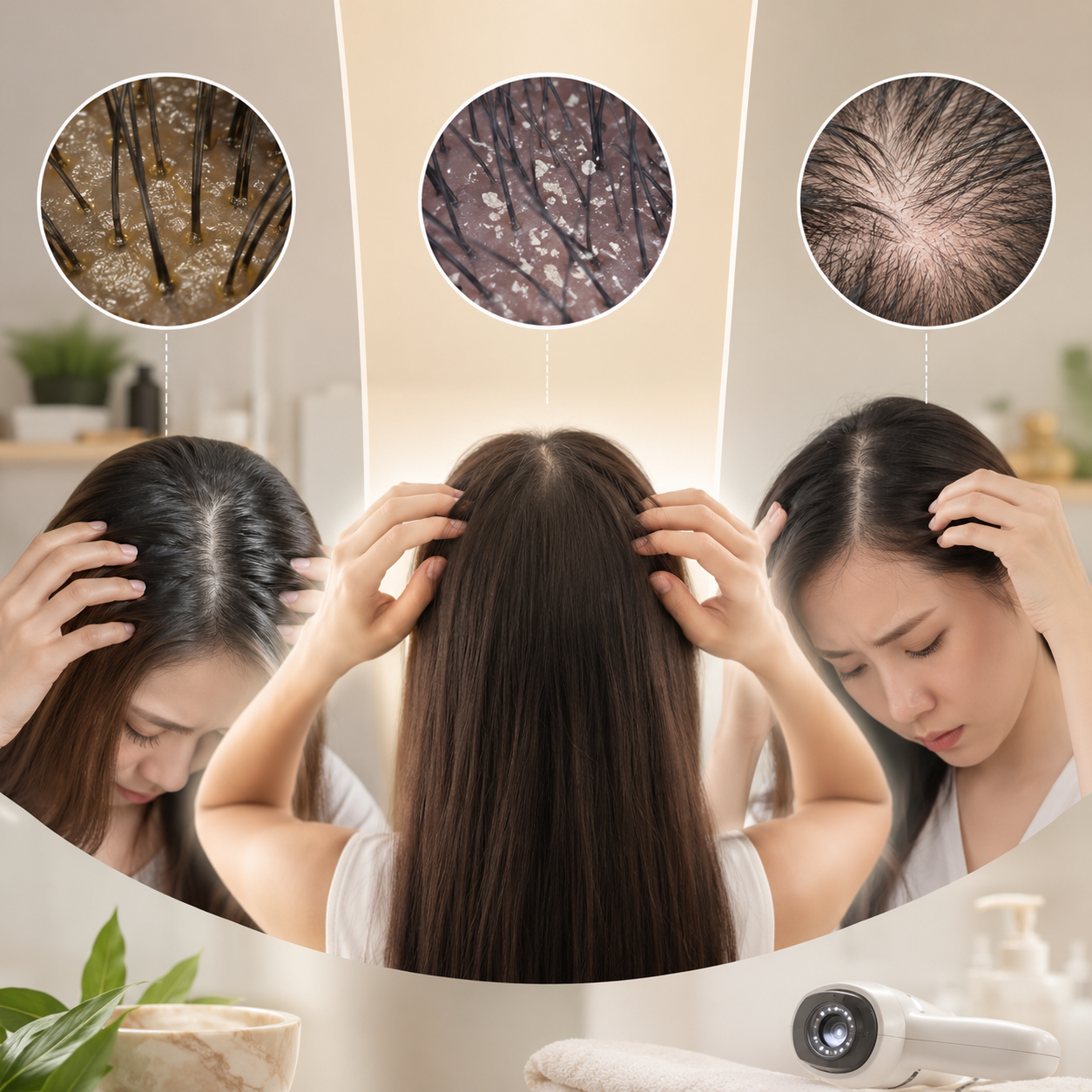
Many people think all flakes are the same, but dandruff can look different depending on the scalp condition.
Some flakes are dry and powdery. Some flakes are oily, sticky and yellowish. Some people also experience itchiness, redness or scalp sensitivity together with dandruff.
This is why dandruff should not be treated as only a “shampoo problem.”
Dry Flakes
Dry flakes are usually smaller, lighter and easier to fall from the scalp. The scalp may feel tight, dry or slightly itchy.
This can happen when the scalp barrier is dry or irritated.
Oily Dandruff
Oily dandruff is usually more sticky. It may attach to the scalp and mix with sebum. The scalp may feel greasy, itchy and uncomfortable.
This type of dandruff often needs proper scalp cleansing and rebalancing, not just normal shampoo.
Irritated or Sensitive Scalp
Sometimes, what looks like dandruff may also come from sensitivity to hair products, chemical services, or scalp irritation.
If your scalp becomes itchy, red, painful or flaky after using a new product or after a chemical service, it may be a sign that your scalp barrier is stressed.
Why Regular Shampoo May Not Be Enough
Shampoo is important, but shampoo alone may not solve every scalp concern.
Most regular shampoos are designed to cleanse the hair and scalp surface. But if your scalp has heavy buildup, excess oil, sticky flakes or imbalance, you may need more targeted scalp care.
Think of it this way:
Washing your face with cleanser is important, but if your skin has clogged pores or sensitivity, you may need a proper facial treatment and skin analysis.
Your scalp is skin too.
A professional scalp treatment helps to deeply cleanse, refresh and rebalance the scalp environment. This can be especially helpful when your scalp feels oily, itchy, flaky or uncomfortable even after washing.
The Link Between Oily Scalp, Dandruff and Hair Fall
Oily scalp and dandruff do not always mean you will have serious hair loss. But when the scalp environment is not healthy, it can affect the condition of your hair roots.
If the scalp has excess oil, buildup or irritation, the hair follicles may not be in the best environment to support healthy-looking hair.
That is why some people notice:
- More hair fall during shampooing
- More hair fall when combing
- Flatter roots
- Weaker-looking hair
- Thinner-looking areas around the hairline or parting
Hair fall can happen for many reasons, including stress, hormones, diet, medical conditions, medication, post-pregnancy changes, chemical damage or genetics. But scalp condition is still one of the first things you should check.
Before buying hair growth products or signing up for a long treatment package, it is better to understand what is happening on your scalp first.
What Happens During a Professional Scalp Analysis?
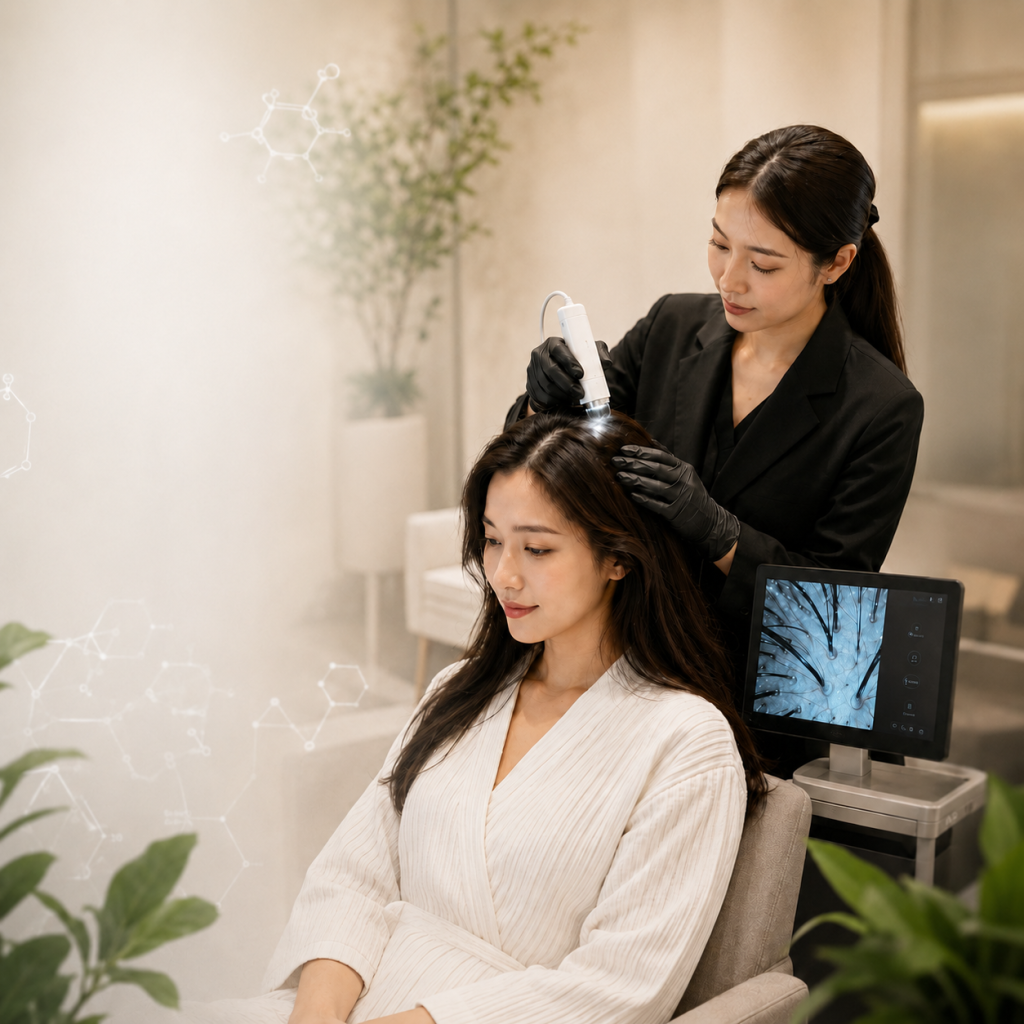
At Kimarie, we believe a proper scalp journey should begin with checking, not guessing.
A scalp analysis helps us understand what your scalp really needs. Instead of only looking at the hair from the outside, we check the scalp condition more closely.
During a scalp consultation, we may look at:
- Oil level
- Scalp buildup
- Flakes or dandruff
- Redness or sensitivity
- Hair root condition
- Hair density
- Signs of clogged follicles
- Overall scalp environment
This helps us recommend the right direction — whether your scalp needs cleansing, calming, balancing, strengthening, or further professional attention.
Not every scalp needs the same treatment. Some people need oil control. Some need hydration. Some need soothing care. Some may need hair growth support. Some may need to see a dermatologist if the condition looks more serious.
The goal is not to sell the most treatment. The goal is to prescribe what your scalp actually needs.
Kimarie’s Approach: Botanical Care Meets Scalp Science
Kimarie’s scalp treatment approach combines Japanese botanical care with professional scalp science.
Our Yululuka scalp treatment by No.3 Japan is designed to support a cleaner, calmer and more balanced scalp experience. It uses plant-derived ingredients and a gentle botanical-science approach, making it suitable for customers who want scalp care that feels premium, relaxing and professional.
This treatment is suitable for people who experience:
- Oily scalp
- Dandruff
- Itchy scalp
- Scalp buildup
- Sensitive scalp
- Hair roots that feel heavy or flat
- Scalp discomfort from lifestyle, sweat or product residue
The experience is not only about cleansing. It is about creating a better scalp environment so your hair can feel lighter, fresher and healthier-looking from the roots.
Why Botanical Alone Is Not Enough
Many customers like the idea of botanical care, but they also want something that feels professional and effective.
At Kimarie, we do not position scalp treatment as just “natural” or “relaxing.” We believe good scalp care needs both:
- Botanical comfort — a gentle, premium, plant-derived experience.
- Scalp science — proper analysis, professional technique and targeted scalp care based on your condition.
This is important because oily scalp and dandruff are not only about washing away oil. The scalp may also need rebalancing, soothing and better care consistency.
That is why our angle is: Where Botanical Care Meets Scalp Science.
When Should You Consider Scalp Treatment?
You may consider professional scalp treatment if:
- Your scalp becomes oily very quickly
- Dandruff keeps coming back
- Your scalp feels itchy or uncomfortable
- You feel product buildup on your scalp
- Your hair roots feel heavy and flat
- You notice more hair fall than usual
- You do a lot of colouring, bleaching or chemical services
- You exercise often or sweat a lot
- You spend a lot of time outdoors
- You want to improve your scalp health before doing hair growth treatment
Professional scalp treatment is also a good first step before advanced hair growth programs, because the scalp environment should be checked and prepared first.
When Should You See a Doctor Instead?
Salon scalp treatment can help improve scalp cleanliness, comfort and balance, but it is not a replacement for medical care.
You should consider seeing a doctor or dermatologist if you have:
- Severe redness
- Painful scalp
- Bleeding or wounds
- Thick crusting
- Sudden patchy hair loss
- Infection-like symptoms
- Dandruff that does not improve for a long time
- Hair loss caused by medical conditions or medication
At Kimarie, we believe in giving honest advice. If your condition is beyond salon care, we will not pretend that a salon treatment can solve everything.
How to Maintain a Healthier Scalp at Home
Scalp treatment works best when your home routine also supports your scalp.
Here are simple habits that can help:
1. Wash Your Scalp Properly
Focus shampoo on the scalp, not only the hair ends. Use your fingertips gently and avoid scratching with nails.
2. Do Not Overload Styling Products
Hair wax, spray, dry shampoo and heavy oils can build up on the scalp. Use them wisely and cleanse properly.
3. Avoid Very Hot Water
Hot water can irritate the scalp and make it feel more sensitive or dry.
4. Choose the Right Shampoo
If your scalp is oily, itchy or flaky, choose a shampoo that suits your scalp condition. Do not only choose based on hair texture.
5. Do Regular Scalp Checks
If your scalp problem keeps returning, do not keep guessing. A scalp analysis can help you understand what is really happening.
Best Scalp Treatment in KL & PJ for Oily Scalp and Dandruff
If you are looking for oily scalp treatment, dandruff treatment or professional scalp analysis in KL and PJ, Kimarie offers scalp care designed for real scalp concerns.
Our team checks your scalp condition and recommends a suitable treatment direction based on what your scalp actually needs.
Whether your concern is oily scalp, dandruff, itchiness, buildup or early signs of hair thinning, the first step is always the same:
Understand your scalp first.
Because healthier-looking hair starts with a healthier scalp environment.
Book a Scalp Analysis at Kimarie
Not sure whether your scalp is oily, dry, sensitive or clogged?
Visit Kimarie for a professional scalp analysis and consultation. Our team will help you understand your scalp condition and recommend the most suitable care based on your needs.
Available at Kimarie branches across Klang Valley.
FAQ: Oily Scalp and Dandruff
1. Why is my scalp oily even after washing?
Your scalp may be producing excess sebum, or there may be buildup from sweat, styling products or improper cleansing. Humid weather can also make the scalp feel oily faster.
2. Is dandruff caused by dry scalp?
Sometimes, but not always. Dandruff can be linked to oily scalp, irritation, yeast imbalance, dry skin, product sensitivity or certain skin conditions. That is why it is important to check the scalp properly.
3. Can oily scalp cause hair fall?
Oily scalp itself may not be the only cause of hair fall, but an unhealthy scalp environment with buildup, irritation or inflammation can affect the condition of the hair roots. If hair fall is increasing, scalp analysis is recommended.
4. How often should I do scalp treatment?
It depends on your scalp condition. Some people need treatment only occasionally for maintenance, while others with oily scalp, dandruff or buildup may need a more consistent scalp care plan.
5. Is Yululuka scalp treatment suitable for sensitive scalp?
Yululuka is designed with a botanical-science approach and is suitable for many customers who prefer gentle scalp care. However, if your scalp has wounds, severe irritation or medical skin conditions, it is better to consult a doctor first.
6. Can scalp treatment remove dandruff permanently?
Dandruff can be managed, but it may come back depending on your scalp condition, lifestyle, product usage and skin sensitivity. Professional scalp treatment can help improve scalp cleanliness and balance, while home care is important for maintenance.
7. Should I do scalp treatment before hair growth treatment?
Yes, in many cases it is helpful to check and prepare the scalp first. A cleaner and more balanced scalp environment is a better foundation before starting any hair growth support program.
8. Which Kimarie treatment is suitable for oily scalp and dandruff?
Kimarie’s Yululuka botanical scalp treatment is suitable for customers with oily scalp, dandruff, itchiness, buildup and scalp discomfort. For hair thinning concerns, our team may also recommend scalp analysis and discuss whether CEP hair growth support is suitable.